
B Amara Handpan Scale: Notes, Chords and Sound
B Amara is the Celtic minor scale on a deep B2 ding. A B Amara 9 handpan has the low B in the centre and eight notes around it: F♯3, A3, B3, C♯4, D4, E4, F♯4 and A4. It sounds open, floating and calm, with a bass that you feel as much as hear, which is why it is a favourite for meditation and slow, spacious playing. You can play one right here.
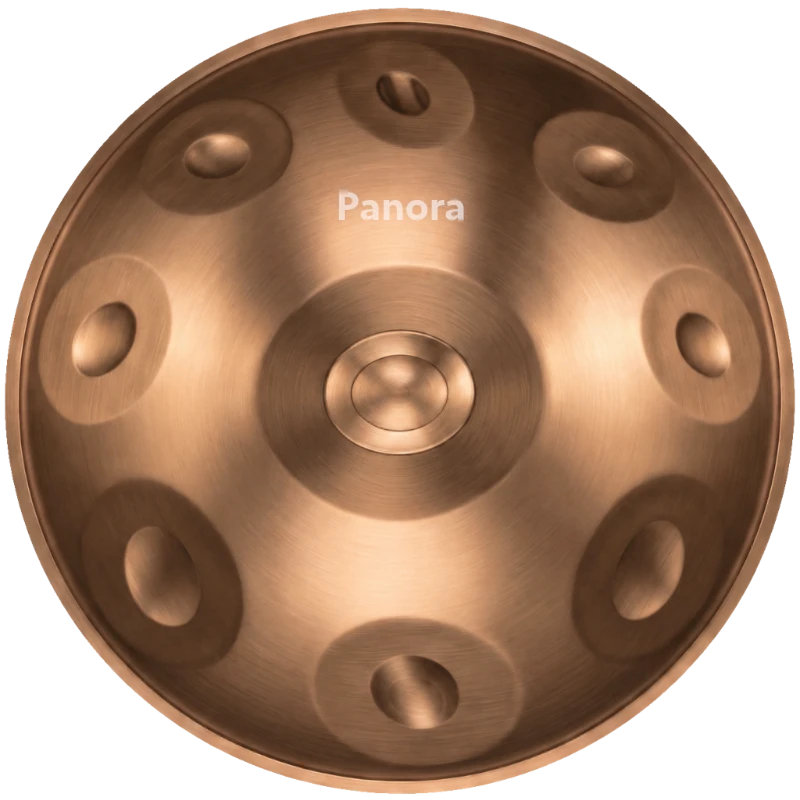
Tap or click any note to play B Amara 9. Headphones recommended.
B Amara notes and layout
On a handpan the notes do not run around the circle in order. They zig-zag from left to right, low to high, so that neighbouring notes in the scale sit on opposite sides and your hands can alternate. On the handpan above, the lowest tone field (F♯3) is at the bottom and the notes climb in a zig-zag up to A4 at the top.
| Position | Note | Role in B minor |
|---|---|---|
| Ding (centre) | B2 | Root, the home note |
| 1 | F♯3 | Fifth, the open bass |
| 2 | A3 | Minor seventh |
| 3 | B3 | Octave of the ding |
| 4 | C♯4 | Second (ninth) |
| 5 | D4 | Minor third, the minor colour |
| 6 | E4 | Fourth |
| 7 | F♯4 | Fifth |
| 8 | A4 | Minor seventh |
Count the note names and you will find six: B, C♯, D, E, F♯ and A. The one missing is G, the sixth. That single gap is what makes Amara sound the way it does.
What does B Amara sound like?
Open, floating and a little mysterious. The minor third (D) keeps it soft and reflective, but without the sixth there is no dark, heavy note pulling the melody down. Nothing in the scale rubs against anything else, so notes can ring into each other and still sound peaceful.
The B2 ding is the other half of its character. It is one of the lowest dings you will find on a standard handpan, a deep, resonant pulse that grounds everything you play above it. That combination is why B Amara is so often chosen for meditation and sound healing, yoga classes and slow ambient music.
Amara, Celtic minor and why the sixth is missing
Amara is the name many handpan makers use for the Celtic minor layout, so B Amara and B Celtic minor are the same set of notes. The name Celtic comes from the sound: a minor scale without its sixth leans towards the open, modal melodies of Irish and Scottish folk music.
Leaving out G also leaves the scale undecided between two moods. Add a G and it becomes B natural minor (Aeolian); add a G♯ and it becomes B Dorian, the brighter minor of folk tunes. Because the handpan has neither, your melody never has to choose, and it floats somewhere in between.
Chords you can play on B Amara
Hit the three notes together or one after another as an arpeggio:
| Chord | Notes | Positions |
|---|---|---|
| B minor | B3, D4, F♯4 | 3, 5, 7 |
| D major | D4, F♯4, A4 | 5, 7, 8 |
| A major | A3, C♯4, E4 | 2, 4, 6 |
| F♯ minor | F♯3, A3, C♯4 | 1, 2, 4 |
| B minor 7 | B3, D4, F♯4, A4 | 3, 5, 7, 8 |
Bm → A → D → Bm is a simple, endlessly repeatable progression that sits perfectly on B Amara. As on every handpan, chords are mostly every other position (2-4-6, 3-5-7), because of the zig-zag layout.
Four beginner patterns to try
Use the handpan at the top of this page, or Panora on your phone. Numbers are positions from the table above.
- Heartbeat: Ding, Ding, 1, 3. Repeat slowly. The low B and its fifth make a deep, steady pulse.
- Open minor: Ding, 3, 5, 7, 5, 3. A B minor arpeggio that rises and falls like a breath.
- Floating line: 4, 5, 6, 7, then 6, 5, 4, Ding. A stepwise melody across both sides of the handpan, with no note that can sound wrong.
- Chord walk: 3-5-7, then 2-4-6, then 5-7-8, then back to 3-5-7. That is Bm, A, D, Bm. Add the ding between chords and you have a song.
B Amara 9 and other versions
The number after the name is how many notes the handpan has, counting the ding. B Amara 9 is the classic layout described here. Larger versions add notes on top, such as B4 on a B Amara 10, or extra bass notes on the bottom shell, depending on the maker. The same Amara pattern exists in other keys too: D Amara and C♯ Amara are common, a little higher and lighter, while B Amara is one of the deepest.
B Amara vs other popular handpan scales
- B Amara leaves out the sixth: deep, open and floating, the calmest of the three.
- D Kurd has all seven notes of D minor: more emotional and cinematic, and the most versatile for melodies.
- Hijaz uses an augmented second for a strongly Middle Eastern sound: beautiful, but more exotic and less flexible for Western melodies.
The best way to choose is to listen. Panora includes 50 handpan scales, so you can play B Amara, D Kurd, Hijaz and many more side by side before you spend money on a steel instrument.
Is B Amara a good first handpan?
For players who want calm, yes. With no clashing notes it is very forgiving, and the low ding makes even simple patterns sound full. It plays fewer chords than D Kurd, so if you want to play many familiar melodies, D Kurd is more flexible. If you mostly want to relax, meditate or improvise, B Amara is a beautiful choice.
Frequently asked questions
What notes are in the B Amara handpan scale?
B2 (ding), F♯3, A3, B3, C♯4, D4, E4, F♯4 and A4 on a B Amara 9.
Is B Amara the same as B Celtic minor?
Yes. Amara is another name for the Celtic minor layout, so both names describe the same notes.
What is the difference between B Amara and D Amara?
They follow the same pattern, but B Amara is a minor third lower. It sounds deeper and darker, with more bass from the ding.
Can I play B Amara online?
Yes, with the handpan at the top of this page. It is free and works in any browser. Our home page has a D Kurd 9 to compare it with.
Which app has a B Amara handpan?
Panora has B Amara 9 along with 49 other scales, plus loop recording and a sequencer to compose with it. See our comparison of the best virtual handpan apps for other options.